

No Major Relief in Sight
Commentary on the Logistics Indicator Q3 2026 by Kai Althoff, Chairman of the Board of Bundesvereinigung Logistik (BVL) e.V. and CEO 4flow SE
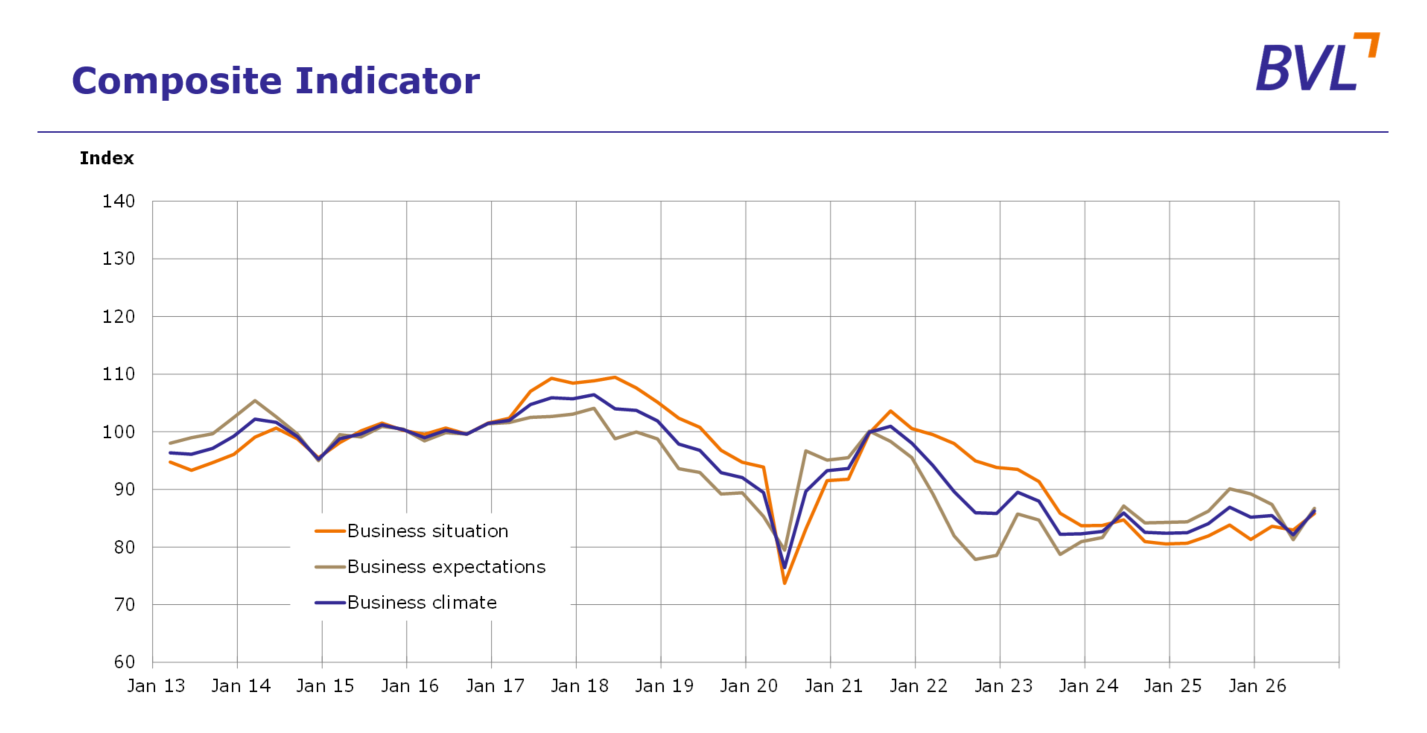
Following headwinds in the second quarter, the logistics indicator is trending slightly upward again in the third quarter of 2026. The business situation improved from 83.0 in Q2 to 85.8 in Q3. The trend is even more pronounced in business expectations: These rose from 81.3 to 86.7 points, an increase of 5.4 points. The business climate also improved significantly, rising from 82.1 to 86.3 points. This positive trend is driven equally by developments among shippers and service providers, with figures rising in all three areas for both groups.
The business situation is thus at its highest level in three years, and the business climate is at its highest level in the past 12 months. This development is a positive sign, but it remains to be seen whether the trend can take hold: Despite the significant jump in business expectations, the figure remains well below the 100-point mark, which is viewed as the threshold for a sustained positive trend.
A more detailed analysis at the monthly level shows that all three metrics have risen steadily since April and peaked in August. This suggests that, following the shock caused by the war in Iran, companies have come to terms with the situation in the Strait of Hormuz, and that the current summer issues—such as drought and low water levels—have not (yet) affected the valuation. Nevertheless, the risk to economic development remains high, as current global political crises—such as the Iran conflict and the situation in Ukraine—are comparatively calm at the moment but by no means have been resolved in a sustainable manner. As a result, there is a risk that the issue of energy costs and security in particular will come to the forefront again this coming winter, once more putting additional pressure on global supply chains.
A look at the ifo Business Climate Index shows that the logistics sector is currently developing in line with the overall economic situation. In August, the ifo Business Climate Index rose to 88.8 points for the fourth consecutive month. Expectations and assessments of the current situation have improved just as much as in the logistics indicator. However, here too, the economy continues to operate below the threshold for a sustainable recovery.
The fact remains: In today’s dynamic global environment, we must do our part by making our supply chains resilient and efficient. That way, we can contribute to positive development. We’ll discuss how best to achieve this—and which innovations and trends can help—on October 21 and 22 at the BVL Supply Chain CX, which, under the motto “deliver.now,” offers a diverse program covering current topics in the logistics industry.
Downloads
- Detailed results ( PDF, 126 Kb)
- Commentary by BVL's President Kai Althoff ( PDF, 41 Kb)